Consciousness of Sheep
Related Articles
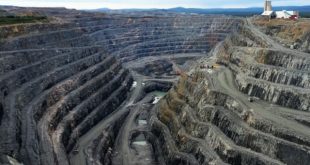

In 1927, the world coal price spiked. The blame was cast onto Welsh miners who had been on strike through the previous year. But it turned out that the world had reached the peak of coal-based coal extraction. And while massive coal deposits remained, the economic (energy) cost of recovering these were too high. And so, the price of coal rose, and with it the price of anything made from, made with or transported using coal rose accordingly.
In and of itself, this coal production peak need not have been catastrophic. The USA was already making the switch from a coal- to an oil-based economy. And soon enough, the rest of the developed world would have followed suit. And with the additional energy and versatility of oil, previously uneconomic coal deposits would have been easily accessible… except for the fact that in the decade following the First World War, the world – and especially the USA – had gone certifiably insane.
To be precise, as European states began to repay their war debts to America, the US stock market was driven to all-time highs. This wasn’t a problem in and of itself. Rather, the problem arose from a widespread belief that the apparent prosperity would continue forever. Indeed, so powerful was this belief that stockbrokers began loaning their clients the funds needed to buy shares. And so widespread was the practice that almost everyone was invested. As the story (probably fake) has it, Joseph Kennedy got out just in time after having a conversation about share prices with a shoeshine boy – realising that if even shoeshine boys were invested, there was nobody left to keep pushing share prices up.
The problem though, ran far deeper than the Ponzi nature of financial bubbles. On the other side of the Atlantic, recovery from the war had been far slower. France in particular was struggling to repay its American borrowings because Germany was unable to repay its war reparations to France. Britain too was struggling with a weak economy and volatile labour relations. And at the time, each of these European economies’ primary energy was coal. So, when the coal price peaked, the risk of a default on war debts grew (The US government had to intervene with Germany and France to restructure the payments, and Britain would eventually default in 1934).
It was the combination of the energy shock and the excessive debt overhang which made the 1929 Wall Street Crash and the ensuing Great Depression so devastating… propelling the Europeans – and eventually the world – on the road to political extremism and the outbreak of a new, and far more deadly, global conflict.
In the course of that conflict, the USA provided six out of every seven barrels of oil consumed. Most of the remainder coming from Venezuela and the Caucasus. Indeed, it was Germany’s failure to secure the oil fields at Maikop (which they captured but couldn’t restore) and Grozny, along with their failure to cut the Soviet’s oil transport along the Volga at Stalingrad which determined the outcome of the conflict. When the western allies landed in Normandy in June 1944, all of their divisions were motorised. Nine out of ten of the German divisions which faced them, in contrast, depended upon horses and footslogging.
The massive 1953-1973 post-war boom owes much of its momentum to the European, Japanese and South Korean economies making the transition from coal to oil as their primary energy source… the continental USA providing a large part of the oil and printing the dollars to loan to the Europeans to buy it. But buy 1970, the continental USA had peaked. And the following year, the dollar was forced off the gold standard, ushering in the fiat currency system which is coming to an end today. Middle Eastern oil-producing states (which also traded in US dollars) sensed the USA’s weakness and used US support for Israel in the 1973 war as an excuse to embargo oil exports to the USA and its allies, creating the oil shock which generated the stagflation which plagued the remainder of the decade.
In one of the most unfortunate coincidences of modern history, the US Federal Reserve Bank under the chairmanship of Paul Volcker forced up interest rates in a last-ditch attempt to crush inflation… the coincidence being that this took place in the midst of a new oil shock caused by the Iranian revolution and the subsequent Iran-Iraq war, which was actually responsible for bringing inflation down. The oil shock, aided by economy-crushing interest rate rises, ushered in the depression of the early-1980s which saw the UK and USA shed millions of industrial jobs and embark on the disastrous financialization of their economies.
Because fiat currency is borrowed into existence, the process of deregulating banking and finance in the mid-1980s, underwritten by new oil production off Alaska, the North Sea and the Gulf of Mexico, resulted in a renewed, but debt-based, economic boom through the 1990s and into the new century. And just as happened in the 1920s, apparent prosperity led to insanity… this time in a securitised mortgage market where it was believed that house prices would rise for ever.
Another energy shock – the peak of global conventional oil production in 2005 – was the first domino in the chain of events which led to the 2008 crash, the European sovereign debt crisis and the depression which has plagued the western economies ever since. Oil prices rose above $140-per-barrel, and esteemed economists assured us that prices would rise above $200 by the end of the decade. But the western economies cannot sustain an oil price much higher than $80 (at today’s price) without going into a deep recession. And in the early 2010s, the oil price slumped back below $40 before gradually rising above $70 once more.
Not that the 2008 (private) debt overhang was ever really resolved. Rather, we have been involved in a game of extend and pretend in which governments and central banks attempt to shore up financial markets until such time as the growth fairy returns. But growth is not really to do with confidence or currency creation. Rather, just as each crash was triggered by an energy shock, so each was overcome by the development of new energy resources. Although the American shale bubble, because of its high energy cost, has proved far less powerful than previous oil developments.
Since then, of course, we have been through the supply chain shocks from the ill-conceived Covid lockdowns and a new energy shock caused by western sanctions on Russia which has left Europe dangerously dependent upon Qatar and the USA for gas (which, among other things, is essential to load-balancing the UK’s electricity grid – the UK now having the most expensive industrial electricity prices in the developed world).
Although statistical chicanery and some monkeying around with the definition has allowed us to escape an official recession, almost everyone in the bottom 80 percent of UK and European households has experienced a slump in living standards in the past five years… one reason why the neoliberal centrist political parties have collapsed even as the parties of the left and right are ahead in polls and in by-elections.
That was before the Trump administration embarked on Operation Epic Clusterfuck, the attempt to destroy the USA and its allies by creating a massive energy shock that will end the US dollar’s role as the global reserve currency. As with 1927 and 2005, the current energy shock may not instantaneously collapse the western financial system. But as with those two shocks, the world is again contending with a massive private debt overhang – particularly across the so-called ‘shadow banking’ system – which is likely to produce a crash far bigger than anything we have seen previously. More worryingly, this time around there is no new energy source – not even one as weak as fracking – waiting in the wings to bail the system out.
As you made it to the end…
you might consider supporting The Consciousness of Sheep. There are seven ways in which you could help me continue my work. First – and easiest by far – please share and like this article on social media. Second follow my page on Facebook. Third follow my channel on YouTube. Fourth, sign up for my monthly e-mail digest to ensure you do not miss my posts, and to stay up to date with news about Energy, Environment and Economy more broadly. Fifth, if you enjoy reading my work and feel able, please leave a tip. Sixth, buy one or more of my publications. Seventh, support me on Patreon.