 Consciousness of Sheep
Related Articles
There is a surprising amount of complacency here in the UK just now. People are complaining about rising fuel prices, of course. But we have yet to see the anticipated panic buying that leads to fuel shortages – filling stations quickly run out if everyone turns up at once. This is in sharp contrast to Asia, where real shortages are forcing export bans and fuel rationing on top of spiking prices (as I write, the Murban Crude price is $146.40 compared to the European – Brent – price of $112.50 and the US – WTI – price of $97.92).
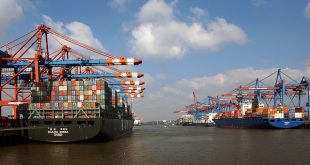
Behind the complacency is humanity’s hard-wired inability to process time. It takes 10 to 15 days for a tanker to travel from the Gulf to Asia. We are now at day 22 of Operation Epic Clusterfuck. And so, over the past week Asian states have been unloading the last of the oil tankers to leave before the Strait of Hormuz was closed. It will take a few more days before Asian refineries have to cut production, and so a few more days before fuel begins to run out. In Europe and the UK, in contrast, the price increases are entirely down to shifts in oil markets and cushioned by the infantile decision to release oil from the strategic reserve (which is designed to mitigate shortages not high prices). Depending on the route taken (and few are using the Red Sea these days) it takes 20 to 30 days for a tanker to travel from the Gulf to Europe. Thus, we are still being supplied by tankers that left the Gulf before the conflict started.
From next week, however, Europe and the UK will face the same kind of shortages now affecting Asia… except that we also have the self-inflicted loss of oil from Russia along with the growing threat that the Trump administration will halt America’s oil exports in an attempt to keep their domestic fuel prices low. Some fuel will, of course, get through. Norway provides 12 percent of Europe’s oil, the UK adds another 4.6 percent, with Brazil, Libya and Nigeria together providing 18.2 percent. But the loss of some 14 percent of Europe’s imports from the Gulf will mean a dramatic change to every European’s way of life. And in the event that Trump does shut off American exports – which, at 15.4%, are Europe’s biggest imports – we are looking at a cascading collapse of the European economies.
In an unusually sensible response to this threat, the UK government has ordered a review of its emergency plans for fuel rationing… this at a time when Bank of England officials are running around like so many headless chickens screaming about inflation, despite oil shocks being a demonstrable cause of deflation and depression – and the current shock is an order of magnitude greater than the shock caused by the 1979 Iranian revolution and the Iran-Iraq war, which caused the industrial decimation of the western economies in the early 1980s.
When the last of the tankers from the Gulf unloads its cargo – sometime in the next week – Europe will have just days before its worst ever fuel shortages occur. This can be cushioned to some extent – and at great cost – by competing for additional supplies from non-Gulf producers – although Asian states will likely outbid Europe – and by further releases from the strategic reserve. But this will barely mitigate what is coming.
Nor is official state rationing likely to save us for two key reasons. First, European governments do not really do anything these days. Most of our critical infrastructure and life support systems are in private hands which may not act in accordance with government emergency plans. Second, the complexity of the European economies works against planning because a breakdown anywhere in the system can rapidly spiral into a cascading collapse. To illustrate this, consider the almost nostalgic events in the UK in the second week of September 2000.
The Brent Crude price had hit (an unconscionably low by today’s standards) $35-per barrel, causing fuel prices to jump above 80 pence per litre – the highest price in the developed world at that time. In response, British truckers and farmers launched a two-pronged protest, running rolling roadblocks along the motorways and through the streets of the big cities, and – more dangerously – blockading the UK’s remaining oil refineries.
Over the next few days, the protests seemed more of an irritation than a threat, although behind the scenes emergency services were looking at ways of preserving fuel stocks, while the public engaged in panic buying. By mid-week, most filling stations were dry, and the few which still had fuel had imposed an informal £5.00 limit on sales. At the same time, ministers were in crisis meetings, while supermarkets imposed food rationing. Six days into the crisis, cascades began to emerge. The BBC cited the loss of stitches at a hospital in the northeast. But companies from water suppliers to DIY stores were experiencing delivery failures which, unaddressed would begin to affect their ability to operate.
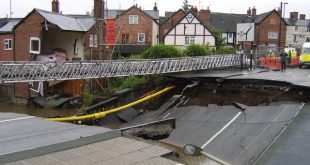
That’s the problem with just-in-time supply models which, despite the experience of the lockdowns, still persist in Europe. You don’t have to take out an entire organisation to make it fail, you only need to deprive it of one key component. When the Eyjafjallajökull volcano erupted in April 2010, its ash cloud prevented flights across Europe. One far from foreseeable consequence was that BMW car production had to be shut down owing to a single component being unavailable. Similarly, when the Fukushima exclusion zone was set up in 2011, global car production slowed because of a lack of a key pigment used in car bumpers. That hospital in Hull was another example. The facilities were intact. The specialist surgeons and surgical team were available. The lights were still on. But something as unforeseeable as a lack of stitches brought the whole operation to a standstill.
Now ask yourself whether a government emergency plan will be able to cover every input to every key process in a modern economy. The answer can be seen in the dog’s breakfast that was the UK government response to the pandemic. The UK government maintains a National Risk Register which lists a pandemic as the greatest civilian threat because of the number of people affected and the impact on the economy. And yet, when Covid-19 embarked on the UK leg of its world tour, ministers were clueless, while key materials such as PPE had been sold off two years before to save money. Nightingale hospital facilities were opened and then left empty for the duration, even as infected people were being sent into nursing homes. Lockdowns were imposed with no prior planning and with no understanding of the long-term impacts… So tell me again about the emergency plan for fuel shortages.
On 14 September 2000, the UK’s fuel blockades ended… although disruption continued into the following week. Today, there is no sign of the war against Iran ending, and the Europeans have announced that they will be cutting their remaining Russian imports too. Trump is now threatening ground invasions in or around Iran, suggesting that the conflict – and the loss of oil exports – will continue for months to come. And even when it comes to an end, the damage to oil and gas facilities around the Gulf will take years to restore… years, that is, when Europe will have to adjust to being a low oil and gas consumer. In the meantime, economies that can only survive on oil prices lower than $80-per-barrel will experience something on a scale, at least, of the Great Depression of the 1930s as most of the population struggle with the cost of essentials like food and energy.
The fact is that even the worse oil shocks of the past – the 1973 oil embargo and the 1979 Iranian revolution – pale in comparison to the loss of oil and gas that Europe is about to experience. And it is doubtful that our elders and betters in Versailles-on-Thames have the wit to think beyond next week. Not least because on one side of them, the people with nose rings and blue hair will be telling them to embrace this leap along the road to net zero, while on the other side, the people with smart suits and 1980s ideology will be urging them to drill for oil and gas which doesn’t exist. Meanwhile, nobody will be looking seriously about how we simplify an oil-based economy which is going to have to get by with a lot less oil… a Great Reset indeed!
As you made it to the end…
you might consider supporting The Consciousness of Sheep. There are seven ways in which you could help me continue my work. First – and easiest by far – please share and like this article on social media. Second follow my page on Facebook. Third follow my channel on YouTube. Fourth, sign up for my monthly e-mail digest to ensure you do not miss my posts, and to stay up to date with news about Energy, Environment and Economy more broadly. Fifth, if you enjoy reading my work and feel able, please leave a tip. Sixth, buy one or more of my publications. Seventh, support me on Patreon.
