Consciousness of Sheep
Related Articles
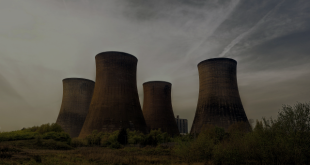
The second law of thermodynamic disproves almost every economic model you’ve ever heard of. And it is a bind that all of us have to live with. Colloquially, it just means that things break down not up. In energy terms, it means that every time energy is converted from one form to another, a portion of that energy is lost as waste heat (which, to physicists, means any temperature above absolute zero). It may also be stated as an ongoing shift from complexity to simplicity, such as an ice cube melting into a puddle of water or the concentrated smoke from your barbecue gradually diffusing into the atmosphere.
But wait a moment. If this is a law of physics which is common across the universe, how come I – a very complex biological organism – am sat here in front of a highly complex electronic machine, writing an essay to post into a highly complex information and communication system? That is, how is it that this pocket of complexity has arisen out of a much simpler background universe?
I have written elsewhere about the tendency for many people to see the hand of God behind such an apparently impossible arrangement. But the Second Law does not say that a shift from simplicity to complexity is impossible, only that it is highly improbable – the shards of glass from the vase you dropped are unlikely to turn themselves back into a vase… but you might apply some glue and some dexterity to achieve that result. That is, concentrated and focussed energy can give rise to complexity. Same goes for biological evolution. Those best adapted to process energy – ‘the fittest’ – survive while all else falls by the wayside. As physicist Eric J. Chaisson explains:
“Selected objects are simply those that remain after all the poorly adapted or less fortunate ones have been removed from a population of such objects. A better term might be ‘non-random elimination,’ for what we really seek to explain are the adverse circumstances responsible for the deletion of some members of a group. Accordingly, selection can be broadly taken to mean preferential interaction of an object with its environment, an acknowledged factor in the flow of resources into and out of any open system, and not just life forms. All systems are selected by their ability to utilize energy; and this energy—the ability to do work—is a ‘force,’ if there is any at all, in evolution.”
Insofar as there is a purpose to the universe, it is to convert energy into background waste heat as rapidly as possible. And since the universe is so vast, the process is bound to take a long time. But one sure-fire way of speeding up the process is the emergence of pockets of complexity with far higher free energy density by mass. Stars emerging from cosmic gas clouds; planets emerging from star systems; life emerging on planets; social species evolving bigger brains; and brains creating national grids and global internets.
The availability of energy though, is key to this at every stage. This is why I liken complexity to a soufflé – it is either rising or collapsing, there is no steady state… one reason why current discussions about ‘sustainability’ are as meaningless as economic theories based upon infinite growth on a finite planet. Humans will either add more energy to increase the complexity that already exists or we will see the acceleration of the process of collapse that we have been in since the global peak of conventional oil production in 2005 (which led inexorably to the banking and finance crash of 2008 just as the global peak of coal-based coal production in 1927 led to the Wall Street Crash in 1929).
It is in this context that we need to view money. Ask an economist or a business journalist what money is, and they will likely tell you it is a medium of exchange, a unit of account, and a store of value. Some may even tell you the mendacious fairy tale about coins – and later banknotes – replacing a system of barter which didn’t really exist in pre-capitalist economies (which ran on systems of grace and favour rather than exchange of value). Very few even begin to understand Tim Morgan’s definition of money as a mere claim on wealth:
“Money, having no intrinsic worth, commands value only as an exercisable ‘claim’ on those material products and services for which it can be exchanged. This, in Surplus Energy Economics, is known as the principle of money as claim, and its validity is surely self-evident.
“No amount of money has the slightest value to anyone isolated from exchange, which is the predicament of a person stranded on a desert island, or cast adrift in a lifeboat. Air-dropping banknotes to people suffering from energy and food deprivation cannot help these people unless these commodities are available for purchase.”
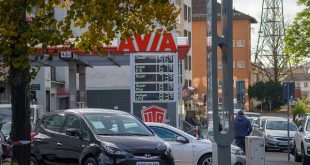
Seen through Chaisson’s lens, these claims upon wealth are the means through which humans direct the energy (direct and embodied) available to us to chosen economic purposes. It is this, of course, which – although mostly unconsciously – determines a large part of what passes for political debate, since the grossly unequal access to money results in highly perverse spending decisions – tech godzillionaires and their bought and paid for politicians, for example, will happily approve spending trillions of dollars on largely useless AI datacentres even as public health, education, transport infrastructure and even clean drinking water systems fall into a growing state of collapse.
If this seems obvious to a retired and increasingly arthritic writer in Wales even as it fails to register with a host of credentialled economists, it is perhaps because the closer to the ground you live, the more you notice the foundations crumbling. When the economists were waxing lyrical about the S&P 500 or the FTSE 100, I was drawing attention to the decline in Christmas lights, the loss of office fridge space and the growth in sex work… each one an early indicator of a growing loss of the energy flows which maintain complexity.
None of these examples seems to be an economy-wide problem, and so, tend to be dismissed. But in their way, they are examples of further distortion in the flows of energy through our complex economy (by which I mean the real, material interactions between humans, not the financial transactions so beloved of the economists). Because as the process of concentrating the claims on energy to those at the global peak of the income ladder lead to such perverse outcomes as firing your girlfriend into space in a rocket-powered dildo, governments are increasingly trapped in the jaws of falling real growth, demand for increased welfare spending, and an ever shrinking tax base.
Nor is doing nothing an option because, as I pointed out above, things break down… Take one of Wales’s annual cultural events, the Urdd Eisteddfod, which is taking place on the island of Anglesey this week. The event is just being held at the show ground adjacent to the A55 trunk road which links the ferry port at Holyhead (the main link to Dublin) with the UK motorway network. The A55 runs across the Britannia bridge over the Menai Strait; a bridge which was rendered unsafe following a fire in May 1970, was reconstructed in 1972, with a road deck carrying the A55 added in 1980, and which is still weight restricted for trains and continuously monitored following the discovery of cracks in its structural beams. It is also the only serious crossing between Anglesey and the mainland, since the other suspension bridge, built by Thomas Telford between 1819 and 1826 has been restricted to light traffic because of its structural weakness (although this doesn’t stop heavy vehicle drivers using it to avoid traffic on the A55, thereby closing the bridge entirely).
Something similar has happened to the crossings between England and Wales in the south too. The original road bridge across the Severn, which opened in September 1966, has been restricted to light traffic following the discovery of weakness in the suspension cables. Although, as with the Menai bridge, the restrictions were easier to impose because of the existence of an alternative crossing – the Prince of Wales bridge, which opened in June 1996.
Nor is the potential for bridge failures limited to the Celtic fringes. Of London’s 19 road bridges across the Thames from Hampton Court bridge in the west to the famous Tower Bridge in the east, three – Westminster bridge (which runs adjacent to parliament), Lambeth bridge, and Vauxhall Bridge have recently been added to Transport for London’s critical list. They join the Albert and Hammersmith bridges, which are now restricted to bicycles and pedestrians, while motor vehicles have had to divert to already congested bridges further along the river. The longer-term questions being whether London’s district councils can afford to continue maintaining the bridges and whether a nation that long ago ceased being able to build anything on time and within budget can hope to build new replacement crossings.
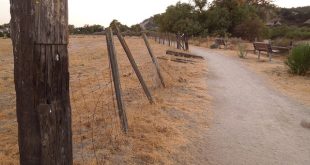
Around 3,000 bridges across the UK are no longer fit for heavy traffic, and the numbers grow with each passing year. And they join a host of public buildings that have become structurally unsound, in large part due to the use of time-limited materials (such as RAAC) when they were built. But more recently, structural weakness has been exacerbated by a failure to spend on infrastructure. This was accelerated by the seldom criticised – but very harmful – Cameron government (Blair and Thatcher come in for far more vitriol) which imposed widespread cuts to local government spending (a common political trick which allows central government to blame local councillors for things falling apart). Maintenance of public infrastructure was an obvious target for cuts – at a time when local authorities struggle to meet their statutory requirements – since a lack of maintenance does not show up immediately, whereas a school or care home closure attracts instant protest.
This is thermodynamic drag in action – a process which follows an ‘S’ curve. That is, when infrastructure is newly built, maintenance is usually cheap and easy. But as the second law of thermodynamics asserts itself, infrastructure maintenance requires ever harder and more expensive work-arounds to avoid complete failure – although sometimes catastrophic failure happens anyway.
When bridges fall out of use, the impact unfolds slowly. Nevertheless, the costs can be high. Eleven years ago, when cracks were discovered in the Forth road bridge, diverted traffic faced an additional 90-mile journey. And the disruption continued until the Queensferry bridge opened two years later. Other critical infrastructure may be harder to live without. During Britain’s heat wave last week, gas power stations were generating more than half of the UK’s electricity as the wind had all but ceased. But in the coming years, gas power stations will no longer be available as they come to the end of their working lives.
The 401MW plant at Corby – among the oldest ‘dash for gas’ plants – is expected to close by the end of the decade. As are the 1.3GW plants in Connah’s Quay and South Humber Bank, and the 1.8GW plant in Peterhead. They will be joined by four of Britain’s five nuclear power plants – Hartlepool, Heysham 1 and 2, and Torness – taking 4.7GW of baseload electricity with them.
Of course, faced with an electricity crunch the government may opt – at huge cost in maintenance – to extend the lifespans of these plants in the hope that new, 3.2GW plants at Hinkley Point and Sizewell can be brought online before any catastrophic failures occur… otherwise the UK population will have to engage in some kind of tribal wind dance in the same way (and likely to the same effect) as they banged pots and pans to ward off Covid in 2020.
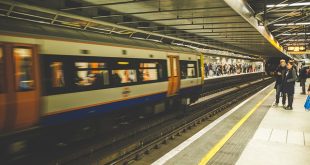
This is how an economy falls apart… not with a bang but with a prolonged whimper. As a private sector captured by a deranged elite misallocates the claims on our remaining energy, the critical infrastructure which forms the foundation slowly succumbs to the second law of thermodynamics, gradually breaking down. Worse still, as a consequence of that same misallocation of energy, we lack the engineers, materials and tools to carry out proper maintenance – still less to build any replacement. And so, things that we take for granted – like clean drinking water, food arriving in the shops, and being able to heat and light our homes – are slowly going away.
People will adapt – at least those who survive the downfall. And they may count themselves lucky that birthrates are collapsing even as life expectancy has gone into reverse. With fewer mouths to feed, the loss of global economies of scale will be easier to cope with as we adjust to a new agrarianism in which – as with the early nineteenth century – most people will have to work to grow food. On the way there, no doubt people will cannibalise the relics of global industrialism in an attempt to maintain what they can of the benefits of our current way of life.
Exactly how it plays out is anyone’s guess. But absent some yet to be discovered high-density energy source, the direction of travel is clear enough. That’s entropy for you!
As you made it to the end…
you might consider supporting The Consciousness of Sheep. There are seven ways in which you could help me continue my work. First – and easiest by far – please share and like this article on social media. Second follow my page on Facebook. Third follow my channel on YouTube. Fourth, sign up for my monthly e-mail digest to ensure you do not miss my posts, and to stay up to date with news about Energy, Environment and Economy more broadly. Fifth, if you enjoy reading my work and feel able, please leave a tip. Sixth, buy one or more of my publications. Seventh, support me on Patreon.